
Ready for your Fall glow-up? Discover special savings on skin treatments, Jeuveau, and laser hair removal. Learn More
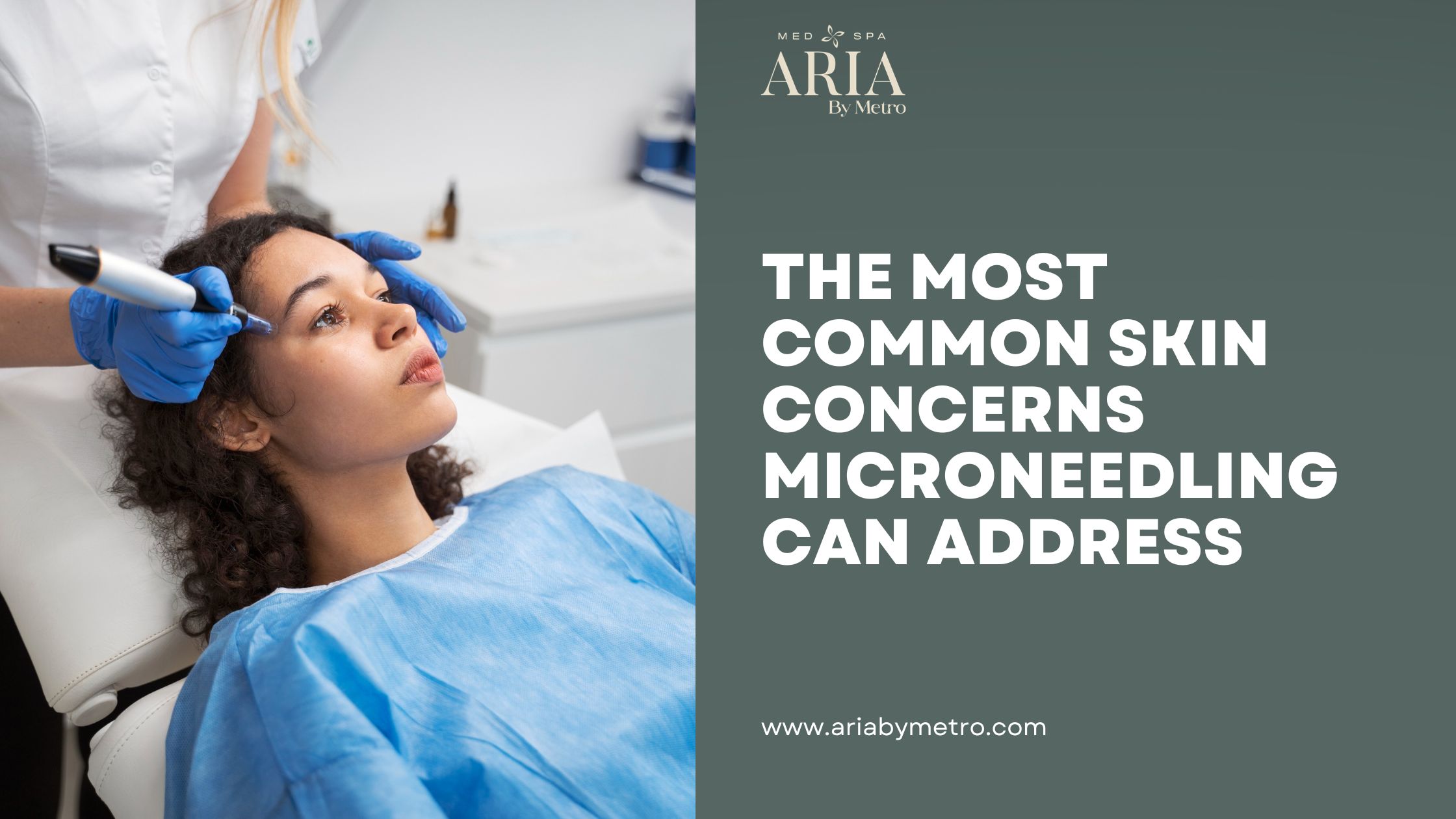
Stand in front of a mirror for long enough and you will spot more than one thing you would change: acne scars that never fully disappeared, fine lines settling in at the corners of your eyes, pores that catch every trace of product, a dullness no amount of sleep fixes.
Each concern can start to feel like its own project, yet many trace back to the same forces: a gradual decline in collagen and a slower pace of cell turnover.
That overlap is why one refined treatment can accomplish more than a shelf of separate products. Microneedling has earned its reputation as one of the most versatile treatments in modern skincare, addressing this list in a single, minimally invasive session.
Microneedling is a minimally invasive treatment that uses fine, sterile needles to create controlled micro-channels across the skin's surface, one of several advanced skin technologies used to address a wide range of concerns. It sounds intense, but the process is precise, quick, and remarkably well tolerated.
The needle depth is adjusted to the treatment area and the specific concern being addressed, which is part of why professional microneedling performed by a trained provider differs meaningfully from at-home devices. Deeper, more consistent channels create a stronger healing response than a handheld roller ever could.
Those micro-channels trigger the body's own healing response, prompting a surge in collagen and elastin production, which is why the treatment is also known as collagen induction therapy.
As new tissue forms, skin looks firmer and more refined. Those same micro-channels also allow medical-grade serums to absorb far more deeply than they would on intact skin, extending the benefit of every product applied afterward.
So what is microneedling good for, exactly? Few treatments can claim to address this many concerns in one session, which is exactly what makes professional microneedling a cornerstone of modern skincare plans.
Microneedling helps break down fibrous scar tissue, encouraging smoother, more even skin to rebuild in its place. Results build gradually across a series of sessions rather than overnight. Many people notice their most meaningful improvement months after their final session, once new collagen has matured.
This is one of the most searched benefits of microneedling for wrinkles, and for good reason. Fresh collagen fills in early lines and creases around the eyes and mouth, softening their depth without altering natural expression. Deeper, more established wrinkles often call for microneedling paired with other treatments.
As the surrounding skin firms and thickens, pores that once looked stretched or shadowed appear visibly smaller. The pores themselves are not resized, but firmer skin around them creates a smoother, more refined surface. This effect builds gradually across a full series of sessions, not after a single visit.
By encouraging faster cell turnover, microneedling for hyperpigmentation can gradually fade discoloration left by sun exposure or old blemishes. Melasma is the exception, since this more stubborn, hormonally influenced condition calls for a careful, provider-guided approach. Tone evens out gradually with each visit, not in one session.
Skin that looks tired or feels uneven often reflects a buildup of surface cells that have overstayed their welcome. Microneedling accelerates their turnover, revealing the smoother, more radiant texture underneath. The difference is often one of the first changes people notice, sometimes within the first couple of sessions.
Early, subtle laxity often responds well to the collagen stimulation microneedling provides, especially when radiofrequency is added for extra tightening. This offers a gentler alternative for those who are not yet ready for surgical intervention. Results here stay subtle by design, meant to firm rather than dramatically lift.
On the body, microneedling can visibly soften stretch marks by encouraging new collagen to fill in the affected tissue. Results are gradual, most noticeable on marks that have matured from red or purple to silver or white. The abdomen and thighs tend to respond particularly well over consistent sessions.
So what does microneedling help with beyond the concerns above? Here is why it has become a staple of modern skincare:
Here is what the experience looks like from start to finish:
Good candidates are generally in overall good health, without active skin infections, and looking to improve texture, tone, scarring, or early signs of aging through a gradual, natural-feeling approach. Microneedling suits most skin tones and types, making it a flexible option where certain lasers fall short.
Caution applies for those with active acne breakouts, certain inflammatory skin conditions like eczema or psoriasis flares, or during pregnancy, when many aesthetic treatments are generally postponed. It is best to wait these out before scheduling treatment.
Because every complexion responds differently, a personalized, physician-led assessment remains the most reliable way to confirm whether microneedling is the right fit for your goals.
Few treatments can address acne scars, fine lines, enlarged pores, uneven tone, dull texture, mild laxity, and stretch marks through one minimally invasive approach. By working with the skin's own collagen production rather than masking concerns, microneedling delivers results that keep improving for months after each session.
At Aria Medspa, every plan starts with a physician-led assessment of your skin and goals, so treatment depth, session spacing, and any added RF energy are chosen specifically for you, not applied as a standard protocol. That personalized, medical-grade approach keeps results building long after you leave the chair.
Ready to see what a tailored microneedling plan can do for your skin? Aria Medspa invites you to book a consultation and start with an assessment built entirely around you.
Cost depends on the treatment area and number of sessions your plan requires, which is why a personalized quote is provided during your consultation.
Topical numbing is applied beforehand, so most people feel only mild pressure or warmth rather than pain.
Most plans include three to six sessions spaced several weeks apart, with initial improvement visible within a few weeks and results continuing to build over the following months.
Downtime is minimal. Skin typically looks flushed for a day or two, and most people return to normal activities right away.
Results can last several months to a year depending on skin type and aftercare, with periodic sessions helping sustain results over time.
Yes, microneedling is considered safe for most skin tones, which is one of its advantages over certain laser treatments that carry more risk for deeper skin tones.