Ready for your Fall glow-up? Discover special savings on skin treatments, Jeuveau, and laser hair removal. Learn More
Ask five people with beautiful skin how they got there and two will say a peel, two will say microneedling, and one will say both. Each treatment resurfaces and renews, yet they work by different routes and reward different goals.
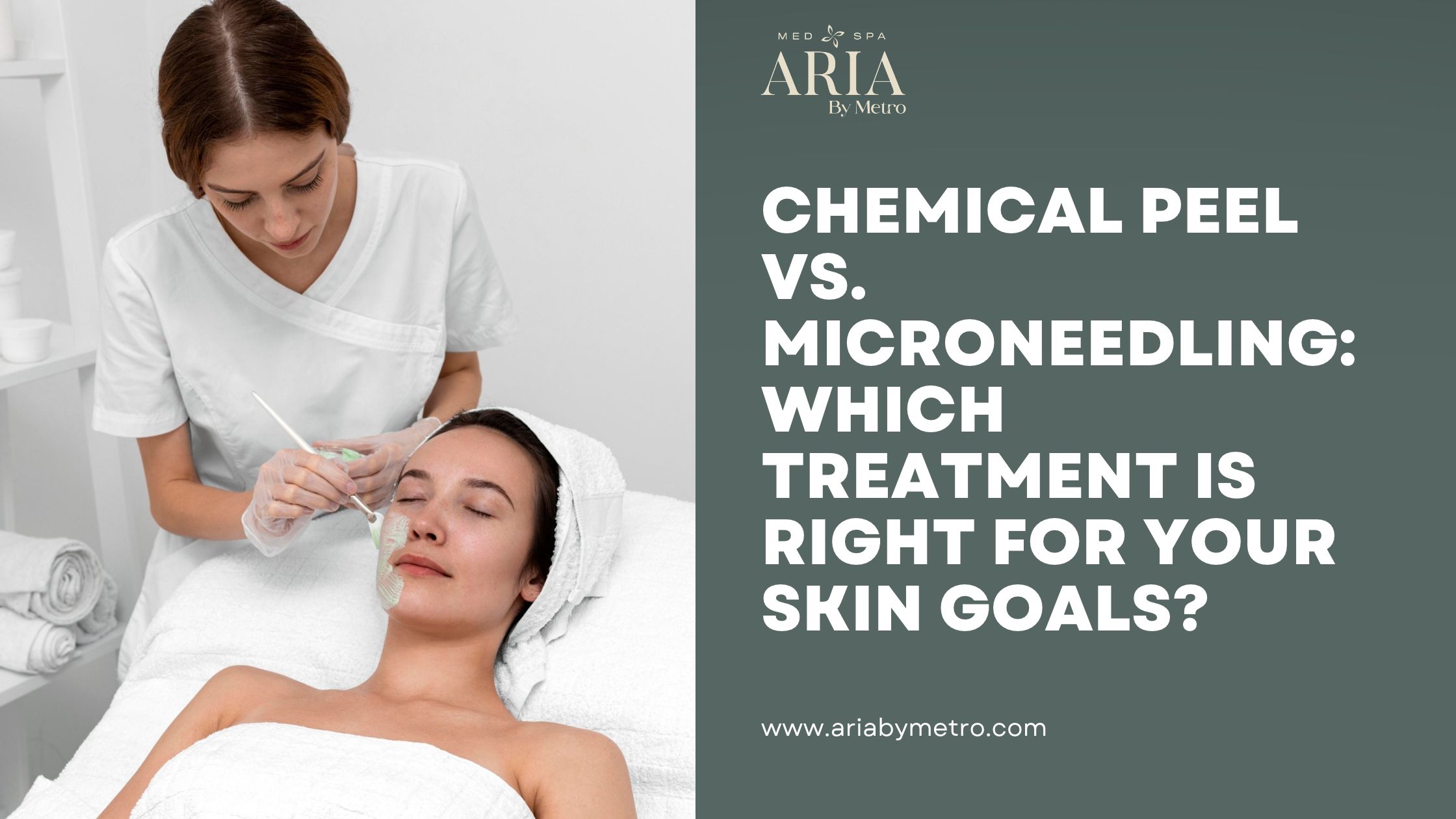
Choosing between a chemical peel vs. microneedling comes down to what you most want to change: tone, texture, or a little of each. Here is how each treatment works, what it does best, and how a provider decides which one fits your skin.
A chemical peel works from the top down. A medical-grade solution is applied to the skin to loosen and lift the outermost layers, which then shed over the following days. Fresher, more even skin emerges, and the depth of the peel determines how much is lifted.
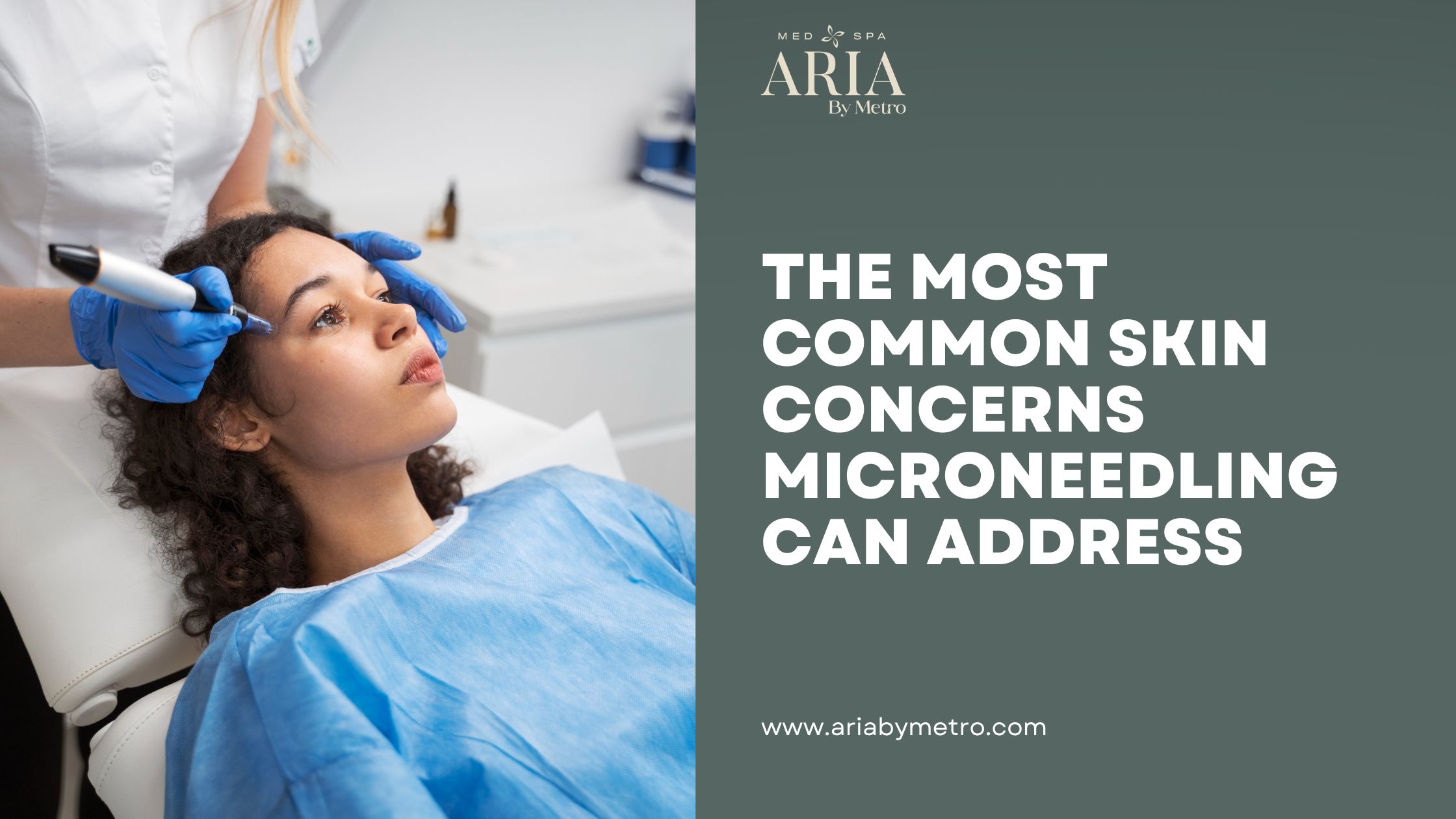
Microneedling works from the inside out. Fine, sterile needles create controlled micro-channels in the skin, and the body answers by producing new collagen and elastin to repair them. Nothing is removed from the surface. The change builds underneath and shows up as firmer, smoother skin over time.
That difference in approach is why the two are not interchangeable. One refines the surface, and the other rebuilds the support beneath it.
| Chemical Peel | Microneedling | |
|---|---|---|
| Approach | Lifts and sheds the outer layers | Stimulates collagen below the surface |
| Strongest for | Uneven tone, sun spots, dullness, surface roughness | Scars, rough texture, enlarged pores, early fine lines |
| Visible recovery | Flaking or peeling, depending on depth | Flushing similar to mild sun exposure |
| Pace of results | Brighter tone often appears as peeling settles | Gradual, building over weeks and months |
| Typical plan | A series, spaced by your provider | A series, spaced several weeks apart |
| Key aftercare | Strict sun protection and gentle products | Sun protection and gentle products |
Microneedling for skin texture is where the treatment earns its reputation. Raised or pitted acne scars, a rough surface that catches light unevenly, pores that look stretched, and early lines that have started to settle all trace partly to thinning structural support. Because microneedling prompts new collagen at that level, it can soften these concerns in a way surface exfoliation cannot.
Progress is gradual. Texture tends to refine across a series of sessions and keeps developing for a while after the last visit, as new collagen matures. Deeper or long-standing scars may call for a longer plan or a combined approach, which a provider can outline after seeing your skin.
For a closer look at the concerns it addresses, our guide to what microneedling can improve goes further, and the medspa technologies page shows the equipment behind Aria’s skin treatments.
A chemical peel for pigmentation targets color held in the upper layers of skin: sun spots, uneven tone left by summer exposure, and the marks that linger after old blemishes. By speeding the shedding of pigmented, damaged cells, a peel lets fresher and more evenly colored skin take their place. The VI Peel is one of the peel options offered at Aria Medspa.
Pigment responds best to patience and protection. A series of lighter peels often serves better than a single aggressive one, and daily sunscreen is essential, since unprotected sun can bring discoloration right back. The formula and depth should also reflect your skin tone and the type of pigment involved, which is why a provider chooses them rather than a product label.
Hormone-influenced pigment such as melasma is more stubborn and calls for a carefully guided plan, so mention it at your visit. Our overview of how chemical peels refresh the skin covers peel types in more detail.
Neither treatment wins outright. The better option is the one that matches the concern you most want to change.
Skin tone, sensitivity, medical history, and schedule all shape the answer, and an in-person consultation settles the question better than any comparison chart.
Recovery is where the two treatments feel most different. After a peel, skin may tighten, flake, or peel for several days, with intensity tied to the depth chosen. After microneedling, skin usually looks flushed, much like mild sun exposure, and calms quickly before a little dryness appears.
Either way, aftercare protects the result:
Some situations call for a pause before either treatment. Your provider will review these with you:
Waiting does not close the door. It protects your skin and sets up a better result when the timing is right.
A comparison can narrow the field, but it cannot see your skin. The clearer answer comes from a provider examining your tone, texture, and history in person, then matching the result you want most to the right treatment: a peel, microneedling, or a sequenced plan of both.
Aria Medspa welcomes you to its La Grange, IL location, where the medical aesthetics team will talk through your options, a realistic timeline, and what recovery will look like around your schedule.
Reserve your skin assessment to begin.
Which is better, microneedling or a chemical peel?
It depends on your main concern. Microneedling suits texture, scarring, and pores, while a chemical peel suits uneven tone, sun spots, and dullness. A consultation identifies the better fit for your skin.
Can I have a peel and microneedling in the same plan?
Often, yes. Providers commonly sequence the two with time between sessions, so skin can recover fully before the next treatment.
Does microneedling help with dark spots?
It can gradually soften mild discoloration by encouraging renewal, but peels are typically the stronger choice for pigment. Melasma needs a provider-guided approach.
Does a chemical peel hurt?
Most people feel tingling or warmth that fades as the solution is neutralized. Sensation varies with the peel depth selected.
How long do results last?
Longevity depends on your skin, the treatment, and how well you protect it from the sun. Maintenance sessions and a steady home routine help sustain the improvement.
Are these treatments appropriate for all skin tones?
Both can be suitable across a range of skin tones when the depth, formula, and settings are chosen carefully. That is a decision for your provider, based on an in-person evaluation.